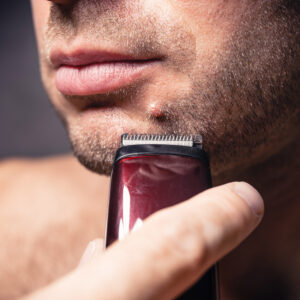
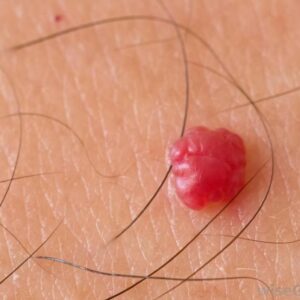
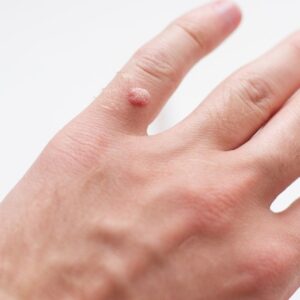
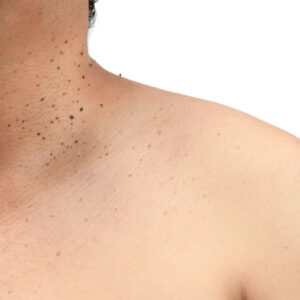
Possibly you have ever wondered if you can remove that unsightly mole or wart that sticks out somewhere on your body. Or that maybe it gets irritated from time to time, starts to bleed or even black hairs come out of it.
I'm sure you have a solution! But first of all, the most important thing is to make a correct pre-surgical dermatological diagnosis to avoid problems in the future. Now I will explain why.

What will this article cover?
Why is it important to make an accurate diagnosis?
The first step for a successful treatment is to make a correct diagnosis of this wart or mole. There are different dermatological lesions that may present as raised lesions on the skin both benign as well as malignant.
There are many differential diagnoses of moles and warts and only a dermatologist is trained to diagnose them correctly.
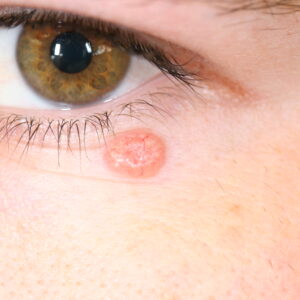
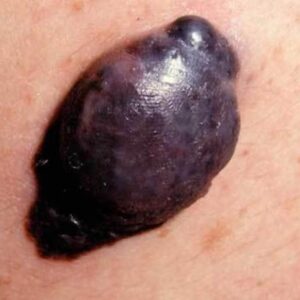
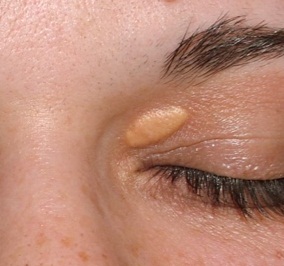
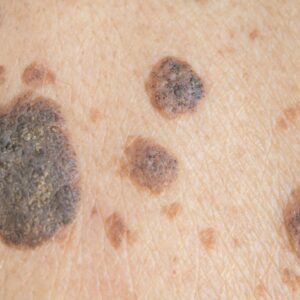
Here are a few examples of some lesions that may look like moles on the face:
-

Dermal nevus -

Basal cell carcinoma -

Nodular melanoma -

Xanthelasma -

Seborrheic keratosis -

Dermal nevus -

Angioma -

Viral wart -

Acrocordones
As you can see, many times what we call moles or warts can have different diagnoses and therefore the treatment will be very different in each case. In some cases we can even find malignant lesions such as melanoma or basal cell carcinoma that can also present clinically as warts.
Therefore, it is important to consult a dermatologist before performing an operation on any lesion.. In our profession we are used to make accurate diagnoses by dermoscopy and in difficult cases even by confocal microscopy that will allow us to remove a mole safely.
The good news is that if we do everything correctly we can get very good results like the ones I show you below.

Is a mole or wart the same thing?
One of the things I see most often in my practice is patients who come in to have burn their "warts". However, lesions that patients interpret as warts are rarely warts. Knowing the difference between a mole and a wart is very important so that avoid applying treatments at home that may worsen the situation.
A mole is a group of cells called melanocytes. which are usually brown or black and can appear anywhere on the body. They usually appear before the age of 20 and most are benign.

On the other hand, the warts are viral lesions produced by the human papillomavirus (HPV). These warts have different clinical presentations depending on the site where they appear. In this way we can find them in the office:
- Palmar and plantar warts
- Genital warts (condyloma)
- Flat warts in children

It is important to know that viral warts are contagious and can continue to appear more if left untreated. But this is not what I will cover in this post.
How to remove a mole safely?
Once we have made the correct diagnosis of a dermal mole or other benign lesion we must choose the most appropriate procedure. There are different surgical techniques that should be assessed depending on the initial diagnosis of the lesion to achieve the best esthetic result.
Among the different surgical techniques we can find:
- Punch biopsy: A circular punch is placed over the mole to remove the mole with the smallest possible diameter.
- Excision by shaving (shave): We reserve it for raised lesions that look like warts in which we shave the lesion at the skin level. The aesthetic result is excellent.
- Surgical excision: We normally use it in flat lesions in which we need to remove the entire lesion to make a correct diagnosis. In this case stitches must be used.
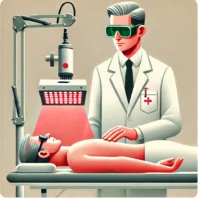
- Ablative laser or CO2 laser: In benign and non-melanocytic skin lesions we can use the CO2 laser for vaporization. It has an excellent aesthetic result.
- Cryotherapy: Only in some benign lesions confirmed by dermoscopy can we apply cryotherapy. Cryotherapy uses liquid nitrogen to generate extremely cold temperatures (-196°C) to destroy the cells. Although it is a quick and easy procedure to perform in the office, the aesthetic results are worse, so I prefer to use other methods.

Subsequently, all lesions that we remove require a histological study, i.e. a biopsy and microscopic examination to rule out signs of skin cancer. It is not uncommon for a skin cancer to appear on a mole and sometimes the only clue to the diagnosis is microscopic study of the lesion.
Do you want me to assess if your mole can be removed?
Removing flat or raised moles
Removing a flat mole and a raised mole are different procedures due to the unique characteristics of each type of mole. This is very important when deciding whether to remove a mole or leave it alone.
Removing flat moles
Flat moles are found deeper in the skin. In order to remove them we will need to make a deep incision to be able to remove the entire mole and analyze it correctly under the microscope.
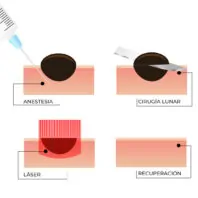
Generally, in these cases, the removal of these moles tends to be avoided.The reason? Well, because removing them involves undergoing a slightly more complex surgical procedure. As illustrated in the image below, the challenge is that removing a flat mole requires the application of stitches, which inevitably results in the formation of a scar. Consequently, we remove flat moles when we suspect that there is any suspicion of malignancy.
Removing raised or dermal moles
Dermal moles rise above the surface of the skin giving a warty appearance. Although these moles can be much more noticeable, in most cases they do not represent a medical problem and their removal is simpler than that of flat molesThe most common options are laser surgery or surgical removal by shaving.
In the following illustration you can see how we perform a shaving procedure to remove a mole with relief.
What can I expect after mole removal?
Once a mole has been removed, there will be a phase of recovery or regeneration of the skin. During this phase the patient will play a key role as it will require a specific wound and scar care protocol to be followed.
Healing time after mole removal depends on the individual. Younger people tend to heal faster than older adults. And, of course, a larger incision will take longer to close than a smaller one. In general, a mole removal scar will take at least two to three weeks to heal.
If everything goes well, we can observe very good results as the following picture shows the result after removing a dermal nevus or mole with relief.

Initial phase of healing
During the initial phase (0-14 days) when we still have a scab or surgical stitches in place will be very important:
- Follow the guideline specific care that your doctor has left you when removing the mole.
- Avoid exposure of the scar to sunlight, as it can cause it to heal more slowly. It can also make the scar darker and more noticeable.
Recovery phase
The recovery phase will begin when the scab from a shaving wound has fallen off or when the surgeon has removed the stitches. Normally the healing process usually lasts from a few months to 1 year. It will be essential for your care:
Massage the wound
Massaging the scar can help to make it less hard and improve vascularization. You can do this 1 to 3 times a day by gently massaging the scar for 1-2 minutes.
Use silicone-based products
Silicone products, such as silicone sheets and gels, can improve healing and have been the most studied. You can use them under makeup and clothing and for a minimum period of 3 months.
- Silicone sheets: Silicone sheets can help make your scar smoother and flatter. To use a silicone sheet, cut it to the size of your scar and apply it over it. You can leave it on for up to 7 days without changing it. Some brands of silicone sheeting include Trofolastin silicone patches and the Cica-Care
- Silicone gels: To use a silicone gel, use it 2 times on your scar and let it dry. Some brands of silicone gels are Mederma silicone gel with sun protection and also Dermatix gel
Protect your scar from the sun
Laser-assisted healing
If you are very concerned about aesthetics, lasers can further aid in the treatment of surgical wounds by speeding recovery and improving scars. Acting quickly and performing them as soon as possible is advantageous, maximizing benefits and scar quality. If you have any questions you can ask us.
Download my free photoprotection guide

Access my complete guide to photoprotection, where I share all my exclusive tips and recommendations - get it now!
Are there any risks when removing a mole?
The biggest risk after surgery is that the site may become infected and leave a visible scar. If you carefully follow the instructions we will give you to care for the wound until it heals, it is very rare for this to happen.
Will there be much scarring?
Whether from surgery or a scrape on the knee, all skin wounds can leave a scar. A scar is the body's natural way of closing the skin and healing a wound.
If you follow all the post-surgical instructions, the chances that you will be able to the wound heals well will be very high and will leave little mark. It is always important to talk to your dermatologist before any procedure to assess the risk of scarring depending on the location and size of the mole.
Can I remove my moles at home?
You should never apply an anti-wart treatment or try to remove something from your own skin if you do not know the diagnosis. Many times we find in the consultation with moles very irritated by treatment that do not correspond and end up leaving a scar or residual hyperpigmentation. This is something we see very frequently in our office and that is why I decided to write the following article: Why is it not a good idea to remove a mole at home?
But not all concerns are aesthetic. The biggest problem associated with removing something from your skin on your own is that there is no way of knowing whether you are removing a benign lesion or a malignant one. At the Melanoma Unit of the Hospital Clínic de Barcelona we repeatedly encounter patients or people not trained to make a proper diagnosis who burn malignant lesions. This leads to late diagnosis of malignant lesions that can be potentially fatal.
Messages for home
In conclusion, I always recommend you to go to a dermatologist to correctly assess your moles or other skin lesions and choose together the best treatment for your case.
If you plan to have a mole removed, talk to your dermatologist about your options for minimizing scarring. Share your concerns up front and ask what you can do after the procedure to help make the scar as faint and small as possible.


353 Responses
Cuánto cuesta ese procedimiento?
Hola Andrés, el precio de un procedimiento dermatológico como este puede variar muchísimo dependiendo de varios factores. Como el tipo de lunar, el tipo de cirugía que se realizará, si requiere ser analizado al microscopio, el tamaño del lunar, el lugar donde está ubicado, etc.
Hola Doctor, yo tenia un lunar en mi nuca, tipo mole. Bien marron y redondo que sobresalia al palpar. sin embargo, en menos de dos meses ese lunar crecio el triple y se volvió de color rosado, como una mora gigante, pero de color rosado. Hasta que se enredó con mi pelo, se secó y se cayo… porqué ocurre eso? vale decir que hoy en dia no tengo nada en la zona y esto paso hace 2 años.
Thank you
Estimada Jasmine, sin poder ver la lesión que tuviste es muy difícil dar un diagnóstico. Seguramente se haya tratado de una lesión benigna que con el enredo del pelo (estrangulación) haya terminado por caerse.
hola doctor cual es la mejor crema reparadora después de sacarse un lunar con laser en la cara ? saludos
Hola Roberto, hay muchas opciones en el mercado y depende también de las opciones que existan en cada país.
Buen día, Doctor.
Tengo muchas verrugas pequeñas en la zona del cuello y me las quiero quitar. Quisiera saber cuál es el método o tratamiento que me recomienda.
Muchas gracias. Saludos cordiales
Hola Rosana,
Se pueden quitar con varios métodos pero para mi gusto lo mejor es hacerlo con láser o mediante exéresis con tijeras quirúrgicas. Seguro que cuando vayas al dermatólogo te explicará las diferentes opciones.
Muchas gracias Doctor por su respuesta. Saludos cordiales
Doctor ,una pregunta :
Tengo bastante lunares planos (pequeños)en la cara ,algunos son color marron y otros negro, me las quiero quitar y quisiera saber ¿que tipo de tratamiento seria mejor ?
Richard, lo más importante es verte en persona para ver de qué tipos de manchas se trata y de esta forma poder enfocar un el tratamiento.
Buenas noches.
¿Si me retiran un lunar con electrocauterizador puede volver a salir? ¿Es mejor recurrir a la cirugía o qué proceso conviene más?
Buenas noches Jennifer,
Depende mucho del tipo de lunar que te han quitado. No puedo darte mucha información sin haber hecho yo el procedimiento.
Best regards
Hola doctor, tengo un lunar en el párpado superior cerca al lagrimal desde que nací, pero ahora he notado que le ha salido bolitas como si fueran granitos encima, me gustaría operármelo pero es posible hacerlo en esa zona del ojo? Gracias doctor.
Hola Claudia,
Sin verlo no puedo decirlo pero seguramente no sea ningún problema por la localización que comentas.
Best regards
Dr. quería consultar una duda que tengo sobre las biopsias, en algún momento me dijeron que al hacer la biopsia se activa el crecimiento de las células y si es malo, crece más rápido o se activa lo malo si no lo era. ¿Es verdad eso?
Gracias por responder!
Hola Gabriela,
No tienes que preocuparte porque esto no es así.
Greetings
Hola, cómo está? Quería consultarle por favor, puesto que hoy la dermatóloga me hizo una biopsia de 4mm de un lunar que venimos observando desde marzo. Pero mi duda es que no puso ningún punto y cuando lo espié al llegar a casa vi que era profundo y tenía sangre fresca todavía. ¿Con qué tamaño es necesario poner puntos?
Gracias.
Hola Gabriela,
Es normal, que en biopsias pequeñas como las que te hicieron a tí, no es necesario poner puntos. Algunas veces la cicatrización es más favorable pero eso hay que verlo caso a caso.
Best regards
Hola! Algún médico de confianza que trabaje tan profesional como usted para recomendar en Argentina.
Gracias!
Claro!!! ¿En qué parte de Argentina vives?
Hola doctor, quería saber el costo de remover un lunar que tengo en la cara, simplemente por estética. El problema que tiene es que ya una dermatóloga me dijo que es profundo como para hacerlo con láser, y que requiere intervención quirúrgica. ¿Usted elimina lunares con operación? ¿Y aproximadamente cuánto es el costo?
Estimado Nicolas, antes de dar una opción es necesario valorar tu lunar. Para ello cuento con una visita virtual desde cualquier parte del mundo o presencial en Barcelona, España. Todos los datos de contacto los puedes revisar aquí.
Buenas tardes Doctor. Necesito consultar cuál sería el método más apropiado para eliminar muchas queratosis seborreicas que tengo por todo mi abdomen. Y además tengo pequeñas verrugas en mi cuello que también desearía sacar.
Muchas gracias . Saludos cordiales.
Hola Rosana,
Existen varios métodos para eliminar múltiples queratosis seborreicas. El que más me gusta a mi es es el láser de CO2.
Best regards
Muchas gracias Doctor. El método de láser CO2 se denomina crioterapia? O es otro método? Este tratamiento es mejor realizarlo en invierno? Se tratan todas las queratosis seborreicas en una misma sesión o requiere de varias sesiones? Muchas gracias. Saludos cordiales
Hola los lunares pueden volver a salir que me he quemado con nitrógeno,pero me vuelven a salir será normal
Hola Silvia,
Antes de quemar cualquier «bulto» o «lunar» es muy importante hacer un correcto diagnóstico con dermatoscopia de lo que estás quemando. En nuestra práctica clínica habitual vemos muchísimos pacientes que se queman «verrugas» o «lunares» cuando en realidad el diagnóstico es otro, incluso un cáncer de piel. Es por ello que mi recomendación es que visites a un especialista y también leas un blog que escribí al respecto: ¿Por qué no debemos quitarnos lunares de forma casera?
Hola doctor, tengo como 6 lunares planos en la cabeza y quisiera quitarmelos por estetica, que remedio seria el adecuado y para que no volvieran a salir.
gracias.
Hola Geo,
En primer lugar hay que ver estos lunares en la consulta para estar seguros de su diagnóstico. Dependiendo de ello se puede valorar un tratamiento.
Hola doctor, una pregunta… La edad depende mucho para quitar un lunar con láser o no?
Hola Raquel. La edad es un factor importante, pero depende más del tipo de lunar. Es mejor verlo en la consulta para tomar una decisión.