This content is independent medical disclosure. I have no commercial relationship with any laboratory or supplement brand.
This article is for educational purposes and does not replace the individualized assessment of your medical team. Decisions about your treatment and diet should be made with your attending specialists.
The gut microbiome accompanies melanoma throughout every stage: it influences the risk of developing it, how the tumor behaves once it appears, and the response to immunotherapy treatment. It is a young field, full of promising signs as well as important nuances that are worth understanding.
If you've been diagnosed with melanoma, have a family member who has had it, or are simply interested in what we can do in our daily lives for our health, in this article I'll explain what science says today and what makes sense to apply. Without overselling, without alarmism.
My name is Sebastian Podlipnik and I am Dermatologist at the Melanoma and Skin Cancer Unit of Hospital Clínic de Barcelona. Every week, I accompany patients in different stages of melanoma, and one of the questions I get asked most often is: "Is there anything I can do from home to help?" The short answer is yes, there are several reasonable things. The long answer is what I'll tell you next.
What is the gut microbiota and why does it matter?
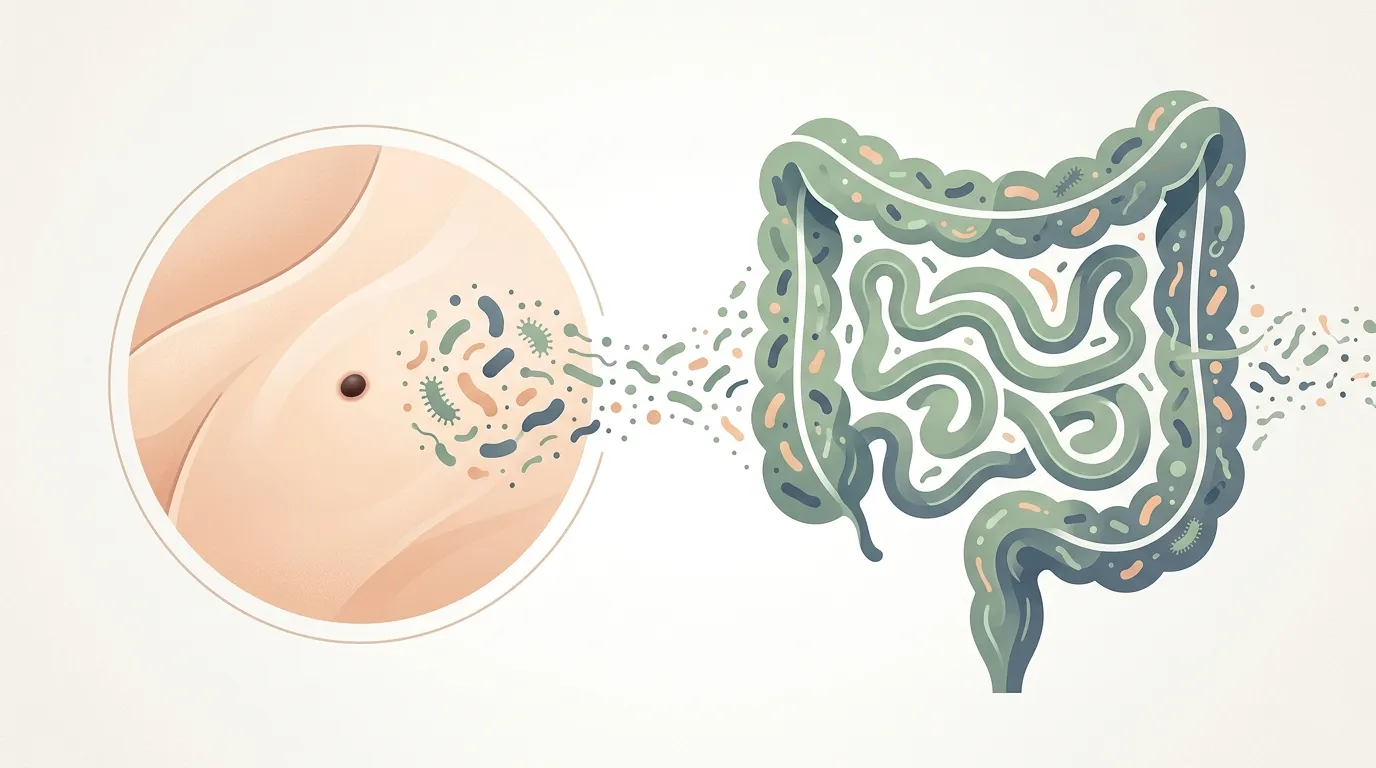
The gut microbiota is the collection of billions of microorganisms (mostly bacteria) that live in your gut. They function like an ecosystem: when there is a variety of species in balance, your immune system works better. When that balance is broken, the immune response can weaken and lead to consequences for general health.
Just ten years ago, we thought the gut was almost solely a digestive tube. Today, we know it's one of the main training organs of the immune system, and that its microbiome communicates with the skin, liver, brain, and tumors when they appear.
- Intestinal microbiota
- Community of bacteria, viruses, fungi, and other microorganisms that inhabit the digestive tract. In healthy adults, the intestine hosts over 100 trillion bacteria of hundreds of different species. Their composition varies depending on diet, medication, geography, and genetic factors.
The microbiome influences melanoma at three key moments
Research over the past seven years has shown that the gut microbiota is not only important during immunotherapy. It also influences the risk of developing melanoma and the tumor's behavior once it appears. We can think of it as three time windows:
- Before diagnosis: certain microbial profiles seem to increase or reduce the risk of melanoma development.
- In the tumor itself: Bacteria found within melanoma are associated with prognosis and the likelihood of recurrence.
- During treatment: The gut microbiota modulates the response to immunotherapy.
In each of these windows, the evidence has different weight and different limitations. Let's take it piece by piece.
Before the diagnosis: microbiome and melanoma risk
Some gut microbiota profiles have been associated with a higher or lower risk of developing melanoma. The evidence is still preliminary and mostly indirect, but it aligns with what we already know about the connection between the gut, systemic inflammation, and immune surveillance against tumors.
The latest evidence suggests that certain gut microbiota profiles may influence the risk of developing melanoma, and that diet modulates this profile. A Mendelian randomization study (a statistical technique that uses genetic variants to estimate causal relationships) analyzed data from hundreds of thousands of people and identified bacterial groups associated with a higher or lower risk of cutaneous melanoma, likely through the activity of immune cells such as NK cells. [(Lou et al., 2024)]. In parallel, a clinical analysis with 634 patients observed that those who followed a higher quality diet (rich in vegetables, fruit, whole grains, and legumes) they had a lower probability of presenting thick melanomas at diagnosis, a factor associated with a better prognosis. [(Hughes et al., 2022)]. They are observational associations, not proof of causality, but they reinforce a plausible message: feeding the microbiota well is, at the very least, a reasonable habit.
Now, very important: This does not mean there is a magic diet that prevents melanoma. Melanoma prevention still relies mainly on photoprotection and early detection of suspicious lesions. The science of the microbiome is adding nuance, not replacing the basics.
The tumor within: the microbiome as a prognostic biomarker
The bacteria present within the melanoma itself can help predict how the tumor will behave. This is one of the most novel findings in the field: we're not just talking about the gut, but also the microbial microenvironment of the tumor tissue itself.
A study published in 2025 in the journal Journal of Investigative Dermatology analyzed primary melanomas and found that The bacterial composition within the tumor was independently associated with overall survival and risk of recurrence. Some bacteria were associated with a better prognosis, and others with a worse prognosis, regardless of the treatment received. [Chan et al., 2025].

Another earlier study, published in European Journal of Cancer, showed that bacteria colonizing the interior of melanoma can influence the number of lymphocytes that enter the tumor and attack it. [(Zhu et al., 2021)]. This offers a plausible explanation for the mechanism: tumor bacteria appear to locally modulate the immune response.
What are the practical implications of this today? For now, none directly for the individual patient. There isn't yet a clinical test for the tumor microbiome that your pathologist routinely orders. It's research data that opens the door to future biomarkers and more personalized therapeutic strategies.
During treatment: microbiome and immunotherapy
Patients with advanced melanoma whose gut microbiota is more diverse and rich in certain bacterial families tend to respond better to immunotherapy. It is the area with the most evidence in the field and the one that has driven clinical interest in the microbiome.
The pioneering finding was by Gopalakrishnan and collaborators in 2018: they analyzed the stool of 112 melanoma patients before starting immunotherapy and discovered that those with a greater variety of gut bacteria responded better and for longer. [Gopalakrishnan et al., 2018]. That same year, a second study found similar results in lung and kidney cancer patients treated with immunotherapy. [(Routy et al., 2018)].
Since then, studies have multiplied. A 2025 review published in JAMA, authored by some of the researchers who have contributed most to this field, confirms that A fiber-rich diet is associated with better outcomes with immunotherapy. and that broad-spectrum antibiotics before treatment could negatively impact the response. [(Fernandez et al., 2025)].
There's an important nuance: the "favorable" bacteria are not the same across all centers or geographies. An analysis that pooled five cohorts showed that microbial signatures vary by region, explaining why different studies identify different species as beneficial. [(McCulloch et al., 2022)]. North American data may not directly translate to the Mediterranean population, and there isn't yet a microbiota clinical test your oncologist can routinely order. Fortunately, there are concrete things you can do today.
What can you do today?
The intervention with the most scientific backing is simple: eat more fiber. There is also emerging data on the Mediterranean diet, physical exercise, and probiotics, although with important nuances. None of what follows replaces the treatment prescribed by your medical team, nor does it guarantee a specific outcome. These are reasonable, safe habits supported by growing data.
Fiber: the habit with the most evidence
In a study of 128 melanoma patients from MD Anderson, those consuming at least 20 grams of fiber daily had improved progression-free survival during immunotherapy (median not reached vs. 13 months for those consuming less). For every additional 5 grams of daily fiber, se observó una asociación con un riesgo de progresión o muerte alrededor de un 30 % menor. [(Spencer et al., 2021)]. This is a single observational study and cannot prove that fiber is the direct cause, but the signal is consistent with the biology of the gut-immune axis and supports considering this a reasonable and safe habit.
The average fiber intake in Spanish adults is around 17-19 g per day, below the threshold of 20 g. Reaching that figure is achievable with reasonable adjustments:
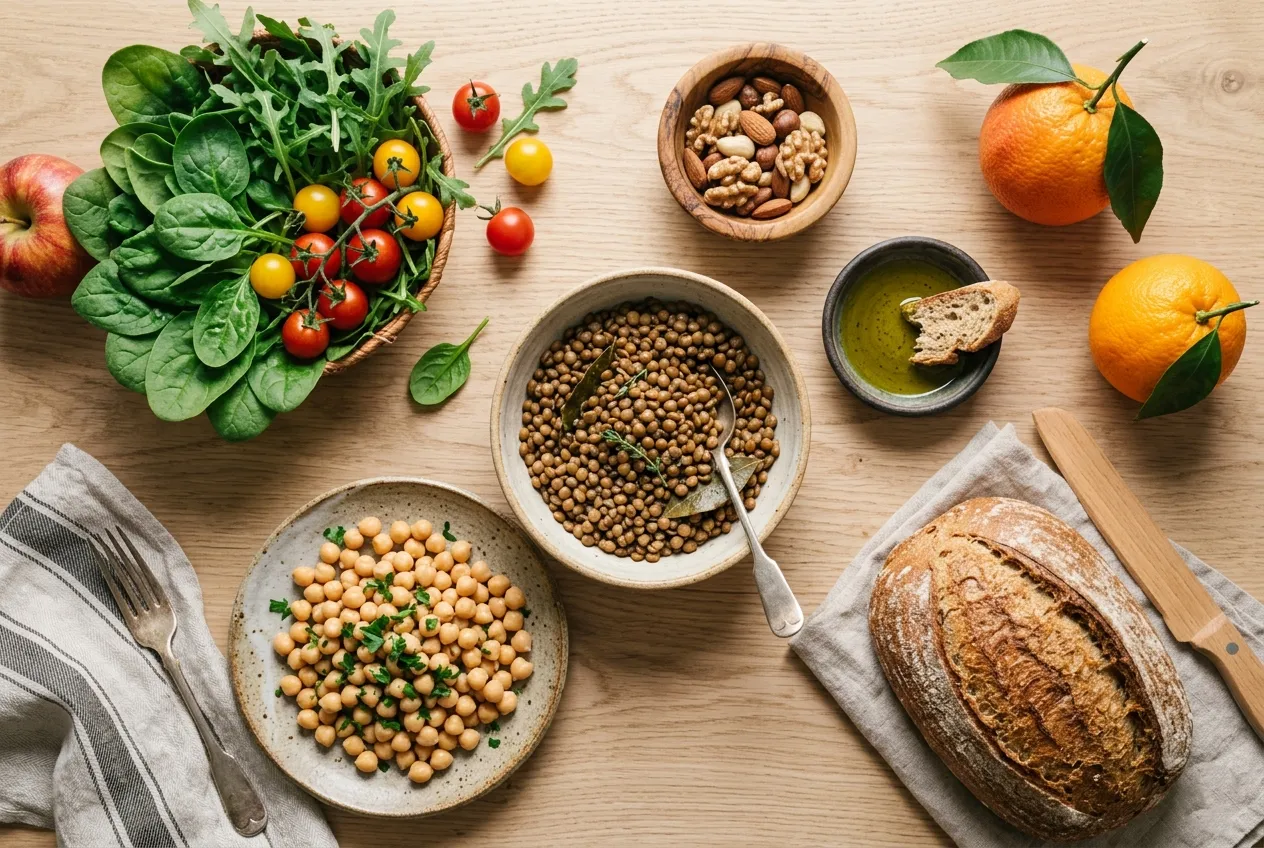
- Legumes 3-4 times a week: Lentils, chickpeas, beans (10-15g fiber per serving)
- Whole grains Oats, brown rice, whole wheat bread (3-5 g per serving)
- Whole fruit and mixed vegetables: Raw or steamed, which is better for preserving fiber (2-4 g per piece)?
- Nuts and seeds A daily handful of almonds, walnuts, or flaxseeds (0.11-0.14 oz)
Mediterranean diet as a framework
It's not about obsessing over grams of fiber, but about adopting an overall dietary pattern. The Mediterranean diet (rich in vegetables, legumes, fish, olive oil, and whole grains) naturally promotes a diverse microbiota, and that same diversity largely explains why Two people can respond differently to the same foods.. A recent review on dietary factors and melanoma places the Mediterranean diet as the dietary pattern with the most support, both for its effect on the microbiome and its anti-inflammatory role. [(Watson et al., 2025)].
Adapted physical exercise
Exercise modifies the composition of gut bacteria and appears to favor the activity of tumor-fighting immune cells. [Phelps et al., 2025]. These data come from animal studies and have not yet been confirmed in patients, but they add to the many known benefits of exercise during cancer treatment. We are not talking about intense workouts: Walk daily, swim, or do gentle exercise adapted to your condition They are safe and recommended options.
Probiotics: Informed Caution
This point causes confusion because there is seemingly contradictory data. A joint analysis in 2025, which included over 3,000 patients, found that those who took probiotics during immunotherapy had better outcomes on average. [(Zhao et al., 2025)]. However, a previous study from MD Anderson observed that commercial probiotics worsened the response in mice. [(Spencer et al., 2021)].
In my clinical experience, the message is clear: Don't self-medicate with probiotics on your own.. There is not yet sufficient evidence to recommend a specific brand or strain. If you want to take them, discuss it with your medical team so they can evaluate your specific case.
Are you concerned about a skin injury?
I can help you. Choose the option that best suits you.
Medications worth discussing with your medical team
Some commonly used medications can influence the composition of your gut microbiota and, consequently, the effectiveness of immunotherapy. This does not mean you should stop taking them, but it is advisable for your medical team to know what you are taking.
Antibiotics: a necessary tool when indicated
Antibiotics are one of the most important tools in modern medicine. When your doctor prescribes them for an infection, taking them is the right thing to do. The nuance that science brings is that their unnecessary use before immunotherapy has been linked in some studies to worse outcomes.
Un análisis conjunto de 2025, específico de melanoma (7 cohortes, 5.213 pacientes), encontró que recibir antibióticos en las 6 semanas previas a iniciar inmunoterapia se asoció a un riesgo de mortalidad alrededor del 55 % mayor (HR 1,55; IC 95% 1,21-1,98). [(Gambichler et al., 2025)]. However, another French study with 2,605 patients showed that, after rigorously adjusting for patient severity, that association practically disappeared, suggesting that A large part of the effect is explained because patients receiving antibiotics are often sicker, not because the antibiotic itself causes the harm. [(Poizeau et al., 2022)].
The message is clear: if you need antibiotics, take them. Caution lies in not self-medicating, not insisting on prescriptions when there's no clear indication, and, if possible, informing your oncologist of any antibiotics you've recently taken.
Proton pump inhibitors (omeprazole, pantoprazole)
Several studies have found that continued use of proton pump inhibitors (PPIs) during immunotherapy is associated with a poorer response. [(Xu et al., 2025)]. They are very common drugs in Spain (omeprazole is one of the most prescribed). If you take them chronically for gastroesophageal reflux, Discuss with your medical team if they are still necessary. or if there are alternatives.
| Factor | Effect on immunotherapy response | What can you do |
|---|---|---|
| Fiber ≥ 20 g/day | Association with better progression-free survival | Legumes, vegetables, whole fruit, whole grains, nuts |
| Mediterranean diet | Promotes a diverse gut microbiota and an anti-inflammatory profile | Olive oil, fish, vegetables, legumes as a global pattern |
| Adapted physical exercise | Preclinical evidence of immune potentiation; confirmed general benefits | Walking, swimming, or gentle exercise adapted to your condition |
| Commercial probiotics | Mixed evidence; no specific strain recommended | Do not self-medicate; consult with your medical team |
| Unnecessary antibiotics | Possible association with worse response; part of the effect attributable to patient severity | Take them only when indicated; do not self-medicate |
| Chronic PPIs (omeprazole, pantoprazole) | Possible association with worse response during immunotherapy | Review with your doctor if they are still necessary |
"The microbiome is not the salvation or the culprit for anything. It is one more lever, with growing evidence, that we can leverage without losing sight of the fact that the pillar of melanoma treatment remains what your medical team tells you."
Dr. Sebastian Podlipnik
The Frontier: Fecal Microbiota Transplantation
Fecal microbiota transplantation (FMT) consists of transferring gut bacteria from a healthy donor to the gut of a patient. In melanoma, it is the most advanced line of research for manipulating the microbiome for therapeutic purposes, although it is not yet a standard treatment.
In 2021, two clinical trials published in the journal Science they showed that melanoma patients who had stopped responding to immunotherapy could regain a response after receiving fecal microbiota transplantation (FMT) from donors who had responded. [(Baruch et al., 2021)] [(Davar et al., 2021)].
In 2023, a Canadian trial administered oral FMT (in capsules) from healthy donors to 20 patients with advanced melanoma formerly starting immunotherapy for the first time. 13 out of 20 patients responded, including 4 complete responses. [(Routy et al., 2023)]. It's a promising result, but it needs to be put into context: there are only 20 patients, no comparison group, and we don't know how many would have responded with immunotherapy alone. What it does tell us is that this line of research has enough merit to continue moving forward.
If you are interested in this field, ask your oncology team if there are active TMF clinical trials in Spain or Europe in which you could participate. For now, TMF is not available outside of clinical trials for melanoma..
Frequently Asked Questions about the Microbiome and Melanoma
Can the microbiome prevent melanoma?
Not exactly. There is preliminary data suggesting that certain microbiota profiles are associated with a higher or lower risk of melanoma, but prevention still relies on early detection And in sun protection. A quality diet is a sensible and safe habit, but it is not a "shield" against melanoma.
What can I eat during melanoma immunotherapy?
A Mediterranean diet rich in fiber (at least 20 g per day) is the recommendation with the most support. Prioritize legumes, various vegetables, whole fruits, whole grains, and nuts. There are no specific "forbidden" foods, but a diverse dietary pattern favors a diverse microbiota.
Can I take probiotics if I am on immunotherapy?
There is no scientific consensus yet. The data in humans is mostly favorable, but the results in animal models are mixed. Do not self-medicate: discuss it with your medical team so they can assess your specific situation before starting any supplement.
Do antibiotics affect the success of immunotherapy?
Some studies have found an association between recent antibiotic use and a poorer response, but it is difficult to separate the effect of the antibiotic from the fact that patients taking them are often sicker. If your doctor prescribes antibiotics for an infection, take them. Prudence means avoiding self-medication.
Is fecal microbiota transplantation available in Spain for melanoma?
Currently, not as standard treatment. TMF for melanoma is only available within clinical trials. If you are interested, ask your oncology team if they are aware of any active trials in Spanish or European centers.
Consult with a specialist
If you have melanoma or a lesion you're concerned about, the first step is to discuss it with a dermatologist. If you need a dermatological assessment or a second opinion, I am available both online and in Barcelona. If you want to understand how advanced melanoma treatment works, I recommend reading my article about immunotherapy in melanoma.
Do you want a professional assessment?
I can help you. Choose the option that best suits you.